
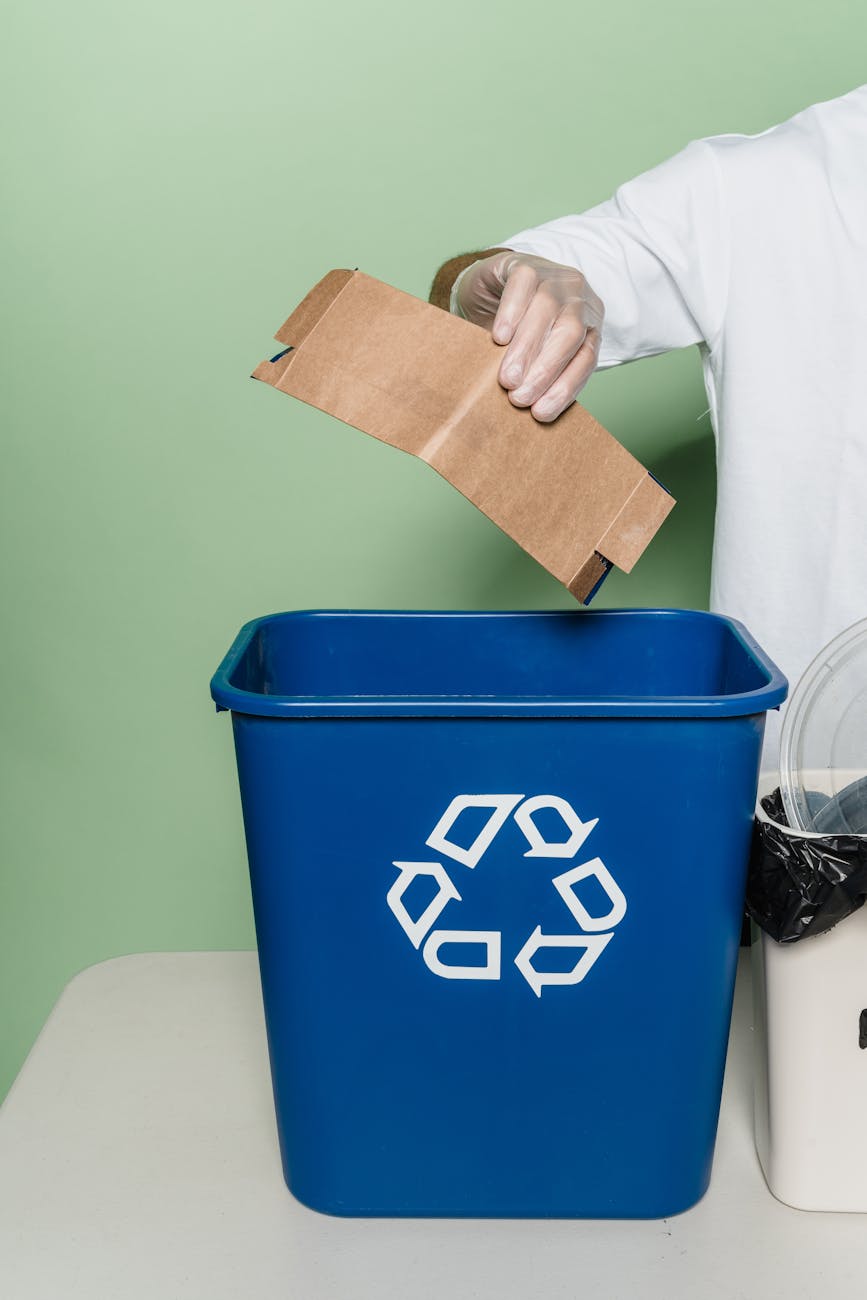
Pop quiz: What’s in your waste bin right now?
If you answered “waste,” you’re not alone – but you’re also missing the point. That waste bin probably contains cardboard that should be recycled, food waste that could be composted, packaging that your supplier would take back, and possibly something hazardous that definitely shouldn’t be there.
Most businesses treat waste as one big undifferentiated problem. You generate stuff you don’t want, you pay someone to take it away, and you try not to think about it too much. But this approach costs you money, creates compliance risks, and misses opportunities to reduce waste in the first place.
The solution starts with knowing exactly what you’re throwing away. And that means identifying your waste streams.
What Is a Waste Stream?
A waste stream is simply a category of waste that shares similar characteristics and can be managed the same way. Instead of just “waste,” you might have five distinct streams: general waste, cardboard, food waste, scrap metal, and used oil.
Why bother separating them? Because different waste types have different:
- Disposal costs (landfill is usually most expensive)
- Regulatory requirements (hazardous vs. non-hazardous)
- Recycling or recovery options (potential revenue, not just cost)
- Environmental impacts (some materials are much worse than others)
Lumping everything together means you’re probably overpaying for disposal and creating unnecessary environmental harm.
Start With the Big Three Categories
Every business generates waste that falls into three basic categories. Start by sorting everything into these groups:
General waste -This is what actually belongs in the trash. Non-recyclable materials with no recovery value and no hazardous properties. Think contaminated packaging, certain plastics, broken non-electronic items, and genuine garbage. If you’ve done everything else right, this should be your smallest stream.
Recyclable materials – Paper, cardboard, metals, glass, and certain plastics that can be reprocessed. These materials have value (even if minimal) and should never go to landfill. The specific materials you can recycle depend on local infrastructure, but most areas handle the basics.
Hazardous waste – Anything that’s flammable, corrosive, reactive, or toxic. This includes obvious stuff like chemicals and batteries, but also less obvious items like fluorescent bulbs, aerosol cans, and contaminated rags. When in doubt, treat it as hazardous – the consequences of getting this wrong are serious.
Drill Down Into Your Specific Streams
Once you’ve got the big three sorted, look at what you’re actually generating in volume. Your specific waste streams will depend on your operations, but here are common ones:
Packaging materials – Cardboard boxes, plastic wrap, pallets, and packaging fill often make up the majority of waste by volume. These are usually highly recyclable or reusable. Track them separately because they represent opportunities to work with suppliers on packaging reduction.
Organic waste – Food scraps, yard waste, and other compostable materials. If you generate significant quantities, composting programs can dramatically reduce your disposal costs.
Metals – Ferrous (iron and steel) and non-ferrous (aluminum, copper, brass) metals often have positive value. Scrap metal dealers will pay you to take it away. Keep it separate and keep it clean.
Electronic waste – Computers, monitors, printers, and other electronics contain valuable materials but also hazardous components. They require specialized recycling and should never go in general waste.
Construction and demolition debris – If you do maintenance, renovations, or construction, separate wood, concrete, drywall, and metals. Many of these materials can be recycled or have lower disposal costs than mixed waste.
The Audit That Changes Everything
Here’s how to actually figure out what you’re throwing away: conduct a waste audit. It sounds complicated, but it’s simple:
Pick a typical week. Don’t choose the week of your annual cleanout or a holiday period. You want normal operations.
Before anything goes in the waste bin, sort it. Lay out tarps or use separate bins. Categorize every item. Have someone with gloves and a checklist actually look at what’s being discarded.
Weigh or estimate volumes for each category. You don’t need scientific precision – rough percentages work fine. The goal is understanding what dominates your waste stream.
Document everything. Take photos, record quantities, and note where each waste type originates in your operation.
What You’ll Probably Find
Most businesses discover three surprising things:
First, you’re paying to landfill valuable materials. That scrap metal, those pallets, and all that cardboard represent money you’re spending on disposal instead of earning on recovery.
Second, contamination is killing your recycling efforts. One greasy pizza box ruins a whole bin of recyclable cardboard. A little bit of hazardous waste in general trash creates liability and environmental risk.
Third, waste generation is incredibly inconsistent. Some departments or processes create vastly more waste than others. You can’t fix what you can’t see.
Creating Your Waste Stream List
Based on your audit, create a formal list of your waste streams. For each one, document:
- Stream name and description
- Estimated quantity (weekly or monthly)
- Current disposal method
- Regulatory classification (especially hazardous vs. non-hazardous)
- Current cost
- Potential alternatives
This becomes your roadmap for improvement. Maybe you discover that 40% of your “waste” is actually recyclable cardboard. That’s not a waste problem – that’s a sorting problem. Much easier to fix.
Keep It Simple and Visual
The best waste categorization system is one people actually use. Complicated schemes with fifteen different bins and color-coded bags sound great in theory but fail in practice.
Start with clear signage at every waste collection point. Pictures work better than words – show what goes in each bin, not just labels. Make it obvious where things belong.
Use physical separation. Different containers, different colors, different locations if needed. The harder you make it to throw the wrong thing in the wrong place, the better your segregation will be.
Review and Refine
Your waste streams will change as your operations evolve. Review your categorization system quarterly for the first year, then annually after that. New products, new processes, and new regulations all affect what you’re throwing away and how it should be managed.
The businesses that handle waste best aren’t the ones with the most sophisticated systems – they’re the ones who actually know what they’re throwing away. Start there, and everything else gets easier.
Stay tuned. ORDUM will be offering waste stream assessment templates and tracking tools that help you identify, categorize, and manage your waste without the complexity – practical tools for real businesses.
Join our mailing list for updates on new resources and templates as they are published.
Leave a Reply